


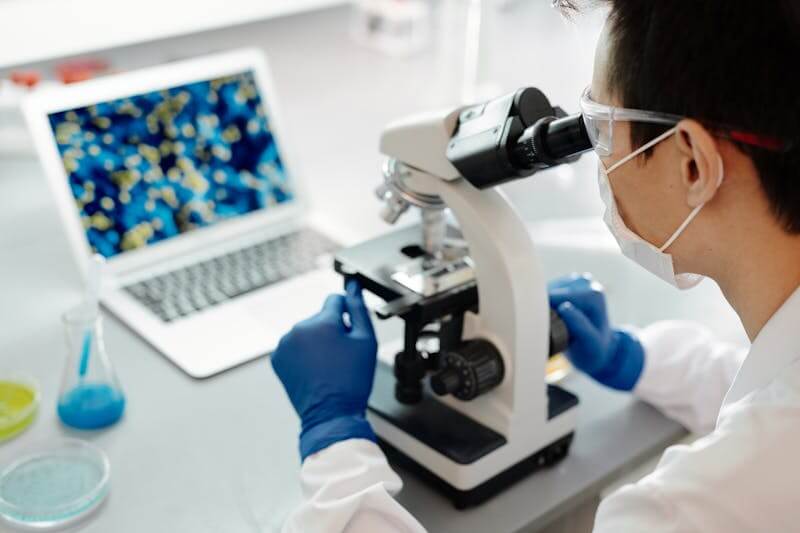
Science runs on data. Great science runs on great data. In fields like cell biology or drug discovery, images are the data. Capturing these images used to be a painstaking craft.
A scientist spent hours at the scope. They searched for the perfect field of view. They adjusted the focus with a careful hand. They captured one image at a time. This process was slow. It was also subjective. It introduced human variability. This is changing fast.
Imaging automation is stepping in. It is the quiet revolution in the modern lab. It does not just make things faster. It makes data better, smarter, and more reliable.
The Tireless Eye
Human attention has limits. Fatigue sets in. The search for cells becomes rushed. The perfect focal plane gets missed. Automated systems have no such limits. They are relentlessly consistent. These systems often center around a sophisticated fluorescence microscope. This instrument is now connected to robotic stages and smart software.
The system can move a slide with micron-level precision. It can find and focus on cells automatically. It then captures hundreds of images overnight. Every image receives the exact same treatment. This removes the “human hour” variable from the equation. The machine works while the lab sleeps.
Bye-Bye, Bias
Human choice is a form of bias. A researcher might unconsciously select the most beautiful cells. Or the fields with the most dramatic effect. This is called selection bias. It skews results. It makes data look better than it truly is. Automation eliminates this bias completely.
The software follows a predefined scan pattern. It images every well of a plate. It captures every corner of a slide. It does not avoid empty areas or clumped cells. This provides a truly representative dataset. The analysis includes everything, the good and the bad. This leads to more honest, more statistically robust conclusions.
The Throughput Turbocharge
Speed is the most obvious win. Automation transforms throughput. A manual experiment might image ten samples per day. An automated system can image hundreds, even thousands. It seamlessly integrates with other lab robots. A liquid handler prepares assay plates. A robotic arm loads them onto the imager. The system runs the acquisition protocol. It saves the data to a server.
This creates a continuous pipeline. Large-scale drug screens become feasible. Long-term time-lapse studies over days are simple. Research velocity increases dramatically.
Guardians of Reproducibility
Reproducibility is a cornerstone of science. Could another lab repeat your experiment? Could you repeat it next month? Manual imaging makes this hard. Settings get forgotten. Exact positions are lost. Automated systems excel here.
They save every parameter. The exposure time, the laser power, the Z-stack settings are all recorded. This creates a complete “recipe” for the image. Anyone can download the protocol. They can run it on a similar system. The results will be comparable. This strengthens collaboration. It builds trust in published findings.
Data Rich, Not Data Poor
Automation enables richer experimental designs. Scientists are no longer limited by their own time. They can ask more complex questions. They can test more conditions. They can use higher replication.
Imagine a dose-response experiment with ten compounds. Each has six doses. Each dose has twelve replicates. That’s 720 image sets. A manual approach would be unthinkable. For an automated system, it is just another night’s work. This depth of data reveals subtle trends. It provides greater statistical power. It uncovers effects that smaller studies would miss.
The Focus on Analysis, Not Acquisition
A major shift happens in the scientist’s workflow. Less time is spent acquiring data. More time is spent understanding it. This is a critical upgrade. The automated system handles the repetitive capture. The researcher then engages with advanced analysis.
They use machine learning to classify cell shapes. They employ software to track cell migration over time. They quantify fluorescence intensity across thousands of cells. This is where real discovery happens. Automation frees the human mind for higher-level interpretation and insight.
The Future: Intelligent Imaging
The next step is adaptive automation. Systems are becoming intelligent. They can analyze images in real time. The software might detect a rare event. It could then trigger a new action. Find a strange cell? Automatically zoom in for a higher-resolution scan. See an interesting pattern? Switch to a different fluorescent channel immediately.
This creates a dynamic feedback loop. The experiment evolves based on what the machine sees. It maximizes information from every sample.
Final Thoughts
In the end, imaging automation is more than a convenience. It is a foundational upgrade to the scientific method. It provides objectivity at scale. It delivers consistency with speed. It turns imaging from an artisan skill into a robust, industrialized data stream.
The goal is not to replace the scientist. It is to empower them. With reliable, high-quality data flowing automatically, researchers can focus on what they do best. Asking brilliant questions. And finding the answers hidden in the light.
