


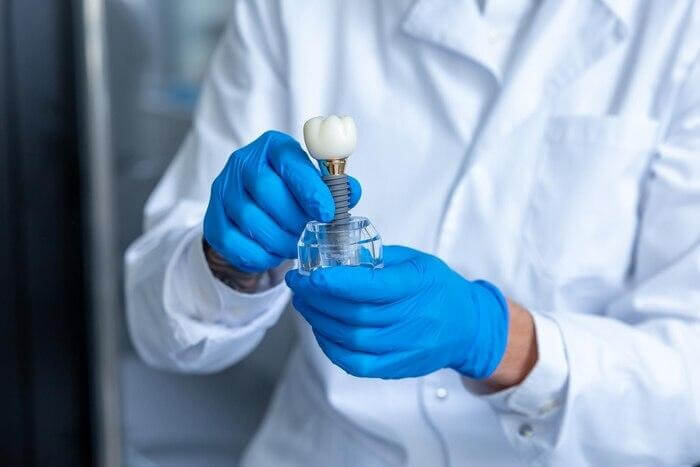
At the end of the day, your skills as a dentist and the reputation of your practice will come down to how much you are willing to invest in your professional development, and in the service offered to your core clientele. Why should you start considering investing in 12-month implant courses that will result in a PG Dip in dental implantology and oral surgery? Well, it’s quite easy to see why. In the UK, dentists, and all medical professionals for that matter, must engage in a practice called continuous professional development, or CPD for short.
For dentists, the General Dental Council of our country requires registered practitioners to maintain a PPD and, in a five-year cycle, to complete at least 100 hours of CPD. Since implant and oral surgery courses are verifiable and their graduation results in obtaining a diploma that’s equivalent to a Master’s degree, your CPD obligation will be fulfilled in only twelve months. After graduating from the program, you will receive a level-7 qualification that’s accredited via EduQual. You will meet CPD requirements, gain the necessary skills to expand the list of your practice’s services, while also building up your credentials. It’s a win-win.
Sure, this only makes sense if you actually graduate. While oral surgery courses are designed to be modular and make use of VLEs, in reality, graduating the program will not exactly be a walk in the park. But this is by design. In order to attend EduQual-attested courses, you will need to have at least one year of experience as a dental practitioner, have a BDS from a university attested by the GDC, and, of course, possess the right language skills to attend a course presented in the English language.
Is It Worth It?
Well, that’s up to you. But for many dental practitioners, 12-month implant courses can represent both a way to expand on their skillsets, as well as gain the required hours for their CPD requirements. So, 12-month oral surgery courses can allow you to kill two birds with one stone. Sure, such oral surgery and implant courses will not come free. But realistically, their financial benefits should become apparent in the first weeks after the program’s graduation.
The number of highly specialised dental interventions, at least in the UK, is slowly but steadily growing. And the prices of implants, as well as the profits associated with these interventions, are nothing to scoff at. Implant courses can allow you to boost your professional skills, expand on the services provided by your dental practice, give you the skillset required to maximise your patients’ recovery, and also provide you with the right tools to make connections with industry professionals.
These types of programs, via simulation kits, case studies and digital modules, should allow you to build your surgical competence, give you the fundamentals and advanced skills required for in-depth dental interventions and also positively contribute to the ROI of your dental practice. Sure, 12-month oral surgery courses can cost upwards of £9,495 if you decide to go for a one-off payment. But realistically, when considering the prices of most implant procedures in the UK, the money you spend on the course will probably be recovered via the ROI of your future services.
So, What Qualification Will You Obtain at the End of the Course?
Well, it depends on the program you select. However, if you go for implant and oral surgery courses, at the end of the 12 months, you will be presented with a Level 7 diploma in Dental Implantology and Oral Surgery, which is accredited in partnership with EduQual, an awarding body that’s approved by the Scottish Qualifications Authority. Since it will be a level 7 diploma, your PG Dip will act as a postgraduate qualification that, under the NQF, will be equivalent to a Master’s degree.
What could you do with this diploma? For starters, you will be legally allowed to provide dental implants, conduct high-complexity dental surgeries, deal with bone grafting, tissue extractions, and even handle restorative dental surgery interventions. So, you will be able to expand your practice’s services, which in turn will come with financial benefits and also enhance your reputation as a dental practitioner. Secondly, the PG Dip will be a way to meet the CPD requirements imposed by the UK’s GDC. Realistically speaking, implant and oral surgery courses can be one of the most important boosts to your career.

What Will Be the Module of the Course?
The oral surgery and implant courses that interest you will be available fully online via a modular VLE, which will include case studies, video lectures and teaching modules which can be replayed by students at any time. At the same time, for practical hands-on training, like for simulations of bone grafting techniques, students will also receive simulation kits that will be delivered directly to their location. But the meat and bones of dental courses are represented by teaching modules, which are organised in six major units.
Unit number one will deal with the foundations of implantology and oral surgery, and during it, students will learn how to conduct patient assessments, will refresh their maxillofacial anatomy knowledge, will begin training in CBCT imaging, and will learning essential surgical skills that revolve around atraumatic extractions and post-operative care. Unit number two deals primarily with dental implant treatment planning, and over the course of it, students will become familiar with the biology of osseointegration and get training in dental photography (among other procedures).
Unit three will cover the fundamentals and advanced elements of surgical techniques and bone augmentation, while unit four will deal with the management of soft tissue interventions, dental implant restorations and of course, digital implantology. Finally, unit five will cover the planning and execution of full-arch restorations as well as zygomatic/pterygoid implants, while the final unit of the course will go over the applications of oral surgery in clinical practice. Overall, it will not be the easiest program in the world to graduate from. But it will be an essential part of your professional development.
