



Lab work changes fast these days. New tools show up and reshape everything. Techniques get sharper. Results look clearer. Researchers feel more confident in their data. It all happens quietly in the background. Most people never notice these shifts.
Yet scientists feel them every day. They work with tiny samples. They chase tiny signals. They need accuracy at every step. Modern tools help them reach that level without stress. One method now gets a lot of attention. It makes a difference in ways that feel small but powerful.
Pipetting Gets an Upgrade
Many experiments start with a simple action. A researcher picks up a pipette. They transfer a liquid. They repeat that step again and again. Each drop matters. Each movement shapes the entire experiment. Labs now rely on better tools that handle tiny amounts of liquid. This is where nanoliter pipetting enters the picture. The system works with incredibly small volumes. It does the job with quiet consistency. It removes the small errors that hide inside manual work.
Researchers feel grateful for this level of control. They load samples with more trust. They see fewer surprises in their results. They get steady performance from one run to the next. That reliability shapes every project. It also brings new ideas into view. People try things they avoided in the past. The method opens new doors.
Genomics Becomes More Precise
Genomics depends on small samples. It relies on careful preparation. A single drop can change an entire readout. Tiny errors create noise in the data. Nanoliter pipetting helps reduce that noise. It places the exact amount of liquid into each well. It supports clean reactions. It gives technicians the precision needed for sequencing work.
Many labs use it for library prep. They load enzymes. They add buffers. They handle DNA fragments with steady accuracy. The results stay consistent. The process wastes fewer reagents. That matters because some materials cost a lot. Budgets stretch further. Experiments run more smoothly. Teams push through more samples each week.
The technique also supports new sequencing methods. Faster workflows become possible. High-throughput projects gain strength. Large studies move at a steady pace. Researchers collect better data with less effort.
Cell Biology Feels the Benefits Too
Cell biology requires the same level of precision. Cells react to tiny changes in their environment. A small error can alter their behavior. Researchers use nanoliter pipetting to control those conditions. They deliver exact amounts of media. They add dyes with accuracy. They introduce reagents without hesitation.
This helps during drug screening. It helps during cell culture. It helps during imaging studies. Cells stay healthier because the environment stays stable. Data looks cleaner because the conditions stay uniform. Labs save time because fewer plates fail. Everything feels more predictable.
Single-cell research benefits even more. Scientists work with small volumes already. A precise tool gives them better confidence. It allows them to study individual cells with less risk. It turns delicate experiments into daily routines. Results become easier to compare across different runs.
Automation Brings Extra Stability
Automation keeps growing inside research labs. It brings structure. It reduces stress. It helps people avoid repetitive strain. Nanoliter pipetting fits perfectly into automated workflows. Robotic systems handle tiny volumes without hesitation. They repeat each motion with near-perfect accuracy. They follow scripts without distractions. The consistency feels refreshing.
This gives researchers more time to think. They step back from repetitive tasks. They focus on analysis. They plan the next experiment. They review results with fresh energy. Automation supports creativity. It supports mental clarity. It makes labs feel more efficient.
It also improves collaboration. Teams share protocols. They run them across different machines. They get similar output from each setup. Shared data becomes easier to interpret. Projects feel more unified.
Less Waste and Lower Costs
Working with nanoliter volumes saves reagents. It cuts down the amount of material used in each experiment. Small savings add up. Expensive enzymes get stretched further. Plates last longer. Labs reduce overall costs without sacrificing quality. This helps universities. It helps startups. It helps large research groups too.
Less waste also supports sustainability goals. Scientists feel pressure to reduce their environmental footprint. Using smaller volumes helps them meet those goals. They throw away fewer materials. They consume fewer plastics. They feel better about the resources they use each day.
Better Reproducibility Across Projects
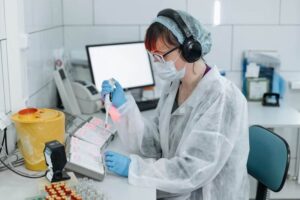
Reproducibility sits at the core of science. Labs everywhere struggle with inconsistent results. Small variations in pipetting create those gaps. Nanoliter tools close that gap. They deliver the same volume over and over. They create stable conditions. They reduce human error. This leads to clearer comparisons between experiments.
Projects get easier to replicate. Other labs follow the same methods. They reach similar results. The community grows more confident in the data. Findings hold more weight. Studies gain credibility.
A Quiet Revolution With Big Effects
This shift might look minor from the outside. A small volume. A precise tool. A simple motion. Yet the impact reaches many fields. Genomics moves faster. Cell biology gains stability. Automation becomes smoother. Costs drop. Waste shrinks. Results look sharper. Researchers feel more supported.
The tool shapes the future of lab work. It gives scientists better control over the tiniest details. Those details influence major discoveries. Nanoliter pipetting sits quietly at the center of that progress. Its effect continues to grow each year.
