


Looking to do more with less on the farm?
Smart technology is revolutionizing the way farmers work. No more guessing if you watered at the right time or worrying if equipment needs repair.
The Internet of Things (IoT) simplifies farm management. Sensors, connected devices, and real-time data collaborate to reduce stress in day-to-day decision-making. And guess what?
The technology is more accessible than ever before.
In this blog, you will learn:
- Why IoT Matters for Modern Farming
- The Core IoT Technologies Transforming Agriculture
- How Smart Equipment Reduces Costs
- Practical Steps to Get Started
Why IoT Matters for Modern Farming
The agriculture industry is witnessing a technology revolution as it moves towards a connected ecosystem.
As per Grand View Research, the global agriculture IoT market was valued at USD 28.65 billion in 2024 and is projected to grow at a CAGR of 12.8% from 2024 to 2030, to reach USD 54.38 billion by 2030. This much growth is a hint towards something big.
Farmers all over the globe are starting to feel the value.
IoT technology helps farmers in monitoring soil condition, crop health, weather patterns, and equipment performance in real-time. This data is transferred to cloud-based systems for farmers to take a faster and smarter decision.
Imagine a situation where you no longer have to go from field to field or check every single machine manually. Sensors will do most of the work and send data to a dashboard. It will display what needs to be done. But how do you do this? This is when quality agricultural equipment and services providers step into the picture. They help farmers access quality equipment that is compatible and can easily integrate with IoT systems.
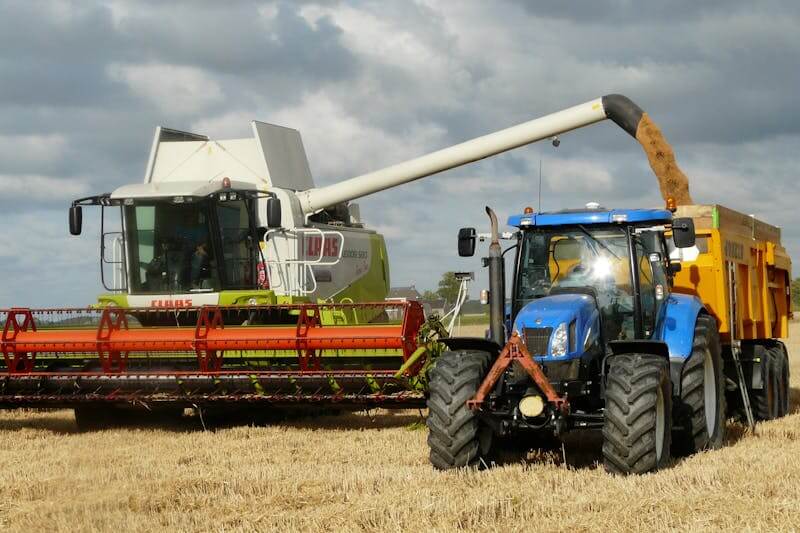
Tractors, harvesters, and irrigation systems are all available in IoT-ready models these days. These connections turn basic equipment into smart tools that can communicate, adapt, and optimize independently.
The Core IoT Technologies Transforming Agriculture
There are a number of technologies that make IoT integration possible. Knowing each of them individually helps to understand what fits best for a particular farm operation.
Soil and Crop Sensors
Sensors that measure moisture level, nutrient content, temperature, and pH play an important role in IoT-enabled farms. They provide constant data and take the guesswork out of irrigation and fertilization decisions.
These soil sensors are placed at multiple levels below the surface. Farmers know the exact amount and the area in which the water is needed. The results are better crop health and not wasting any resources.
Smart Irrigation Systems
Automated irrigation is one of the biggest IoT wins in the agriculture industry.
These systems use real-time soil moisture data and weather forecasts to decide when and where to provide water. Water only flows when crops need it and where crops need it.
As per research published in ScienceDirect, field trials in areas using IoT-based automated irrigation systems showed a reduction in water usage by 30% compared to traditional methods and helped in maintaining optimal soil moisture levels in the fields.
This much efficiency and gain can make a big difference across large operations.
GPS-Guided Equipment
GPS equipment used in tractors and harvesters provides precise control right down to an inch. It allows:
- Accurate rows for both planting and harvesting
- Less overlap and missed areas
- Optimized fuel use
- Automated steering and operations
GPS guidance takes the pressure off the operator while improving consistency with every pass through the field.
Predictive Maintenance Systems
Breakdowns in equipment result in huge losses in terms of time and money. Sensors on IoT systems can monitor equipment health and predict failures before they occur.
These systems keep a record of vibration patterns, fluid levels, changes in temperature, and wear and tear. When a reading does not match the normal parameters, alerts are sent out immediately. Maintenance is scheduled before a minor issue becomes a major breakdown.
Drones and Aerial Imaging
Agricultural drones and imaging from above help in capturing high-resolution images. These images provide information regarding the areas where crops are stressed due to lack of water, pest activity, and irrigation problems which are otherwise not visible from the ground level. With the help of AI, data is collected which can help in finding out exactly where to intervene.
How Smart Equipment Reduces Costs
The numbers are on point when it comes to IoT integration. Let us see some of the cost-saving methods which IoT can do for a farm:
- Water Savings: Traditional irrigation leads to wasting huge amounts of water. Smart irrigation systems apply the water only when needed. Farmers have reported a reduction in water usage by 30% or even more in farms that have implemented IoT-based irrigation systems.
- Labor Efficiency: Automation takes over tasks that earlier required constant human supervision. Monitoring, adjustment, and routine checks are done automatically. This will free up labor for other activities that require human decision-making and skill.
- Lower Input Costs: Precision in applying fertilizers and pesticides means using only what the crops need and nothing more. This not only reduces the amount spent on inputs but also reduces environmental impact. Less waste means more money.
- Equipment Longevity: Predictive maintenance allows catching problems before they get out of hand. Replacement of parts happens before causing a chain of problems. Equipment runs better and for a longer period when maintenance is proactive instead of reactive.
- Higher Yields: These efficiencies add up to better outcomes for crops. Optimal water, nutrients, and timing produce healthier plants and better yield. The investment made in technology is worth it through better harvest quality and quantity.
Practical Steps to Get Started
Adopting IoT does not mean an entire operation has to be overhauled overnight. Slow and steady wins the race for most farms when it comes to IoT integration.
Start Small
Choose one area where improved data will make a difference. Soil moisture monitoring and smart irrigation are two of the best places to start. Easy wins here build the confidence to expand into other areas.
Choose the Right Equipment
Not all equipment is compatible to the same extent with IoT systems. Do some research to find out which brands and models have the best connectivity options. Make future upgrade plans when making purchase decisions.
Invest in Connectivity
IoT systems need a strong and stable internet connection. Network connectivity has improved in rural areas but gaps do exist. Evaluate network coverage and consider cellular-based systems or satellite connectivity for remote fields.
Train the Team
Technology can only be beneficial when used by people who know how to use it. Spend time on training the operators and managers on the new system. Keep it basic and build on knowledge with time.
Work with the Experts
Equipment dealers and agricultural technology specialists can be a great help. They know what works and does not work in a particular region for specific crops. Use their expertise while planning and implementing.
Wrapping It Up
IoT in farm equipment is no longer a thing of the future. Farmers are using it right now to reduce costs, save resources, and improve productivity.
The combination of sensors, smart irrigation, GPS guidance, and predictive maintenance creates a connected farm operation that functions more efficiently than before. Farmers take data-driven decisions instead of making assumptions. Problems are caught earlier. Resources are used wisely.
Here is a quick recap:
- IoT enables farmers to monitor soil, crops, weather, and equipment in real-time.
- Smart irrigation systems can reduce water usage by 30% or more.
- Predictive maintenance increases equipment lifespan and prevents costly breakdowns.
- GPS-guided machinery improves precision and reduces waste.
- Start small and scale up. Implementation is easy.
The technology is only improving every day and costs continue to drop. Farms that invest in IoT integration position themselves to succeed in the long term in an increasingly competitive industry.
Adopting smart farming technology is no longer the question, the real question is how quickly a farm operation can start reaping these benefits.
