


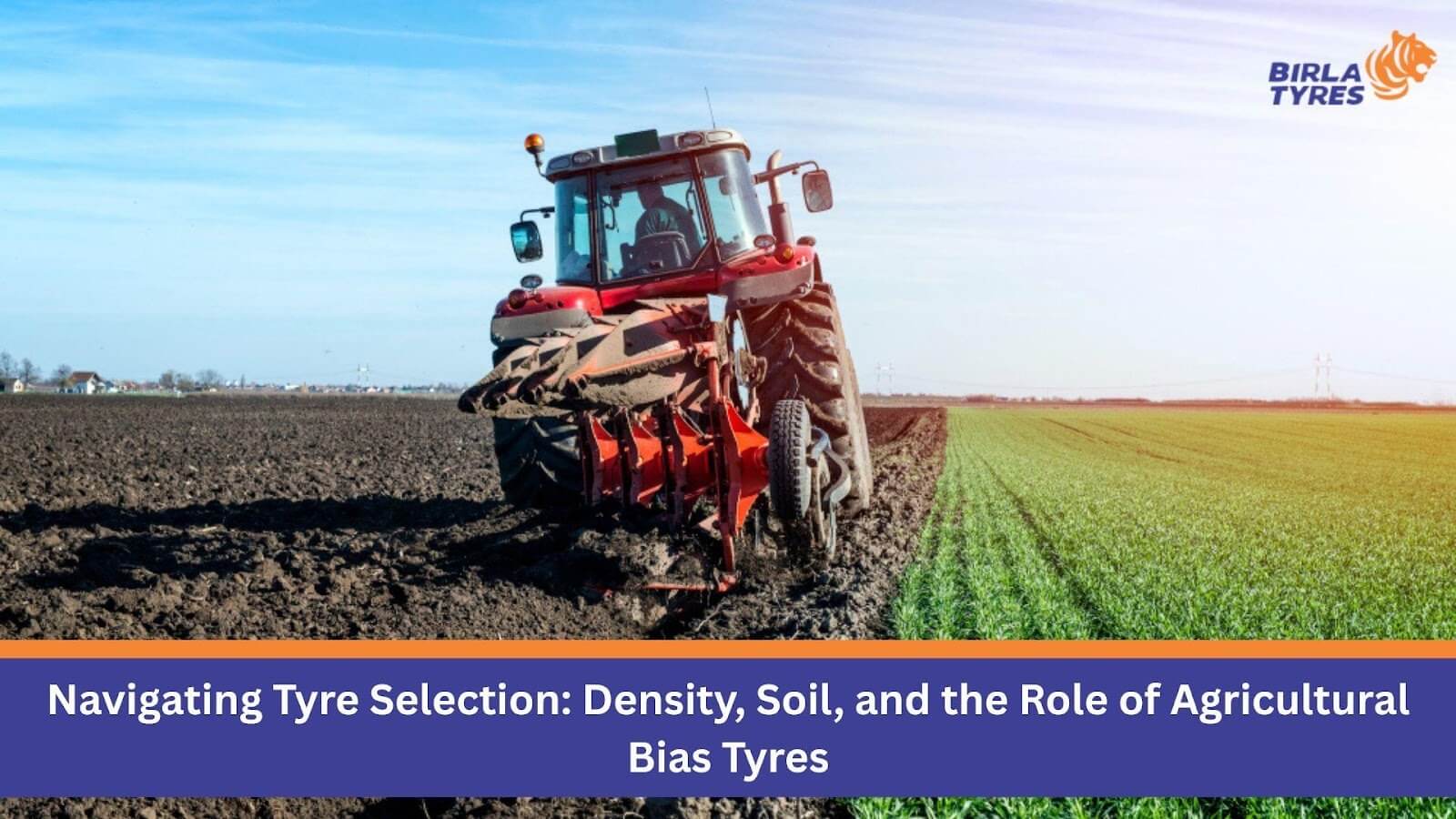
India, where agricultural vehicles operate across mixed terrains and unpredictable surfaces, choosing the right bias tyre becomes essential for performance and durability. While many users try to understand more of what the vehicle is all about, the answer to selecting the right bias tyres is rooted in soil quality, terrain type, and density of the soil.
It’s critical to choose the right bias tyres for your agricultural vehicles. The selection of the right vehicle directly links with the efficiency of the tyre, crop health, and the overall return on investment.
Additionally, for farmers, the selection of the right bias tyres ensures soil protection, and the durability of the tyres reduces maintenance difficulties. If you’re wondering how to choose the right bias tyres, read this comprehensive guide to make the right selection of bias tyres for your vehicle.
Understanding the Basics of Agricultural Tyre Selection
The agriculture industry in India heavily relies on the strong grip of the bias tyres. Whether you own a tractor, harvester, or utility vehicle, the tyres need to be friendly with the terrain while also staying within your budget and fulfilling your needs.
Selection of wrong tyres can lead to issues like soil compaction, decrease fuel efficiency, premature wear, and even reduced yield. On the other hand, the right bias tyre improves traction, reduces slippage, and helps the machinery operate effectively under different road conditions.
Key Factors Farmers Must Consider When Selecting Tyres Include
- Soil Type and Condition: Sandy, loamy, or clay soils respond differently to tyre penetration and compaction.
- Soil density: Tyres with lower density require a different approach to the soil when compared to high-density soils that can easily get compacted.
- Tyre Design and Construction: Tyre design and construction have a significant impact on how the vehicle operates in different agricultural environments. For example, bias tyres for tractors will equip your vehicle with better traction and durability in the fields. On the other hand, radial tyres are more efficient for haulage on the highways.
- Load Requirements: Tyre structure and stability are critical factors to consider when choosing a tyre based on its construction method. Bias construction makes tyres formidable against off-road conditions and the diverse agricultural landscape in India.
Soil Type, Density, and Tyre Interaction
Soil is the foundation of success for farmers. However, it’s also important to remember that the soil is highly sensitive to compaction. Choosing the wrong tyre without considering the soil can damage the soil structure, affecting water infiltration and root penetration. Learn about the soil’s nature before choosing agricultural tyres.
Sandy Soil
Sandy soils have a low density, and this type of soil doesn’t compact too fast. However, the downside of sandy soil is the issue with traction. Such soil conditions require bias tyres with deep, aggressive lugs to dig in and provide better stability. Pure sandy soil is relatively uncommon in Indian agricultural fields. It’s more common in the deserts and sandy areas.
Loamy Soil
Loamy soil is typically considered ideal for cultivation. This type of soil contains a mixture of sand, clay, and silt. This type of soil is prone to a medium level of compaction when the machinery passes through it repeatedly. Loamy soils work well with bias tyres, as these tyres distribute load effectively, offer flexibility, and maintain consistent grip under typical farming conditions.
Clay Soil
Clay soils are dense, retain water, and are heavy. Such a nature makes this type of soil vulnerable to compaction. Tractors running on clay fields sometimes face slippage, which can cause fatality. This is quite common during rainy seasons. Clay soils make it difficult for agricultural vehicles to maintain handling with high loads.
The Role of Agricultural Bias Tyres
Although typically overshadowed by modern radial tyres, bias tyres provide significant benefits—especially when it comes to farming and agricultural work. Here’s why:
1. Strong Sidewall Support
Bias tyres follow a crisscrossed nylon or polyester construction with cords extending from bead to bead. This design helps build strong sidewalls, giving farmers an added layer of protection against stubble, stones and external damage.
The strong sidewall design also allows bias tyres to handle load variations across different soil densities, making them well-suited for demanding farm conditions where durability and stability are critical.
2. Load-Bearing Capacity
Agricultural machinery is bound to handle heavy weights as vehicles must carry loads and operate in rough terrain. Bias tyres are naturally equipped with a durable construction to bear a significant load. In fact, this is the ideal tyre construction for ploughing and hauling.
3. Durability on Uneven Terrain
Bias tyres are less prone to sidewall punctures, cuts, and bulges. These tyres are durable against mixed soil conditions where uneven pressure points affect the vehicle’s performance.
Farmers who are working across clay ridges, loam beds, or sandy stretches get significant benefits from the extra resilience these tyres equip the vehicles with.
4. Cost Advantage for Farmers
While radial tyres often outperform in fuel efficiency, bias tyres are more affordable and accessible in markets where farming input costs must be controlled. This economic suitability helps farmers make practical decisions without compromising essential performance.
5. Grip on Softer Surfaces
In conditions where soil lacks firmness, such as wet loam or sandy beds, bias tyres generate improved grip due to their lug pattern and structural stiffness. This limits excessive wheel slip, conserving fuel and improving operational efficiency.
Minimizing Soil Compaction with the Right Tyre
Before you choose any bias tyre for your agricultural vehicle, take soil compaction into consideration to avoid hidden costs due to wrong selection. Check the soil type, your agricultural needs, and the vehicle’s instructions before choosing a tyre replacement.
If you’re operating in more compact soil, it’s critical to know that such soil makes the growth of the root shallow, and reduced permeability causes lower yields. Choosing tyres that minimise soil compaction during ploughing will ensure better yields. However, bias tyres reduce compaction by default:
- Dispersing weight across a larger footprint: When operating under recommended inflation, Bias tyres disperse weight across a larger footprint, reducing chances of compaction at specific places in the field.
- Stronger sidewall design: The stronger sidewalls resist deflection, meaning weight is evenly transferred to the ground instead of concentrated in narrow areas.
- Regular maintenance makes it more effective: With proper maintenance and usage, bias tyres maintain their structure in both low-density sandy soils and denser clay fields.
Choosing Bias Tyres for Different Applications
Navigating the right bias tyre selection is more difficult than getting an accessory for your vehicle. It’s linked with perational efficiency and farm return on investment. As mentioned above, it’s critical to choose a bias tyre depending on the soil type, density, and crop productivity.
By understanding how bias tyres interact with soil density and supporting smart agricultural practices, farmers can protect soil structure, improve traction, and support consistent productivity. For those seeking reliability in tough agricultural conditions, bias tyres remain a well-grounded choice for modern farming.
