


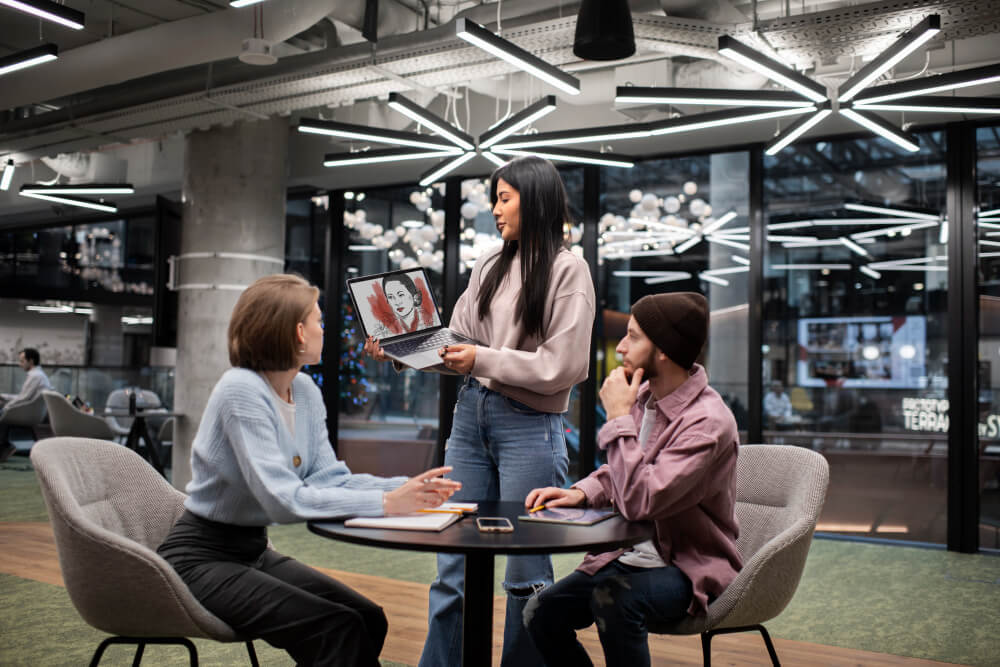
A good office has always needed more than nice chairs and a hopeful color palette. The workplaces that thrive now tend to treat design as part hospitality, part strategy, and part quiet psychology. People walk in, sense the energy, and subconsciously decide whether they can focus, collaborate, or stay inspired. That decision happens fast, which puts a surprising amount of weight on layout, lighting, texture, and the invisible rhythms that shape a day. When those pieces work together, teams move with more ease. When they do not, even strong cultures feel a bit off. It is worth looking closely at the details because they are the pieces employees interact with hour after hour.
Designing For The Way Attention Actually Works
Workplace attention does not behave like a switch. It ebbs and returns, often directed by whatever the environment encourages. Designers who understand that tend to build in subtle choices that guide people without announcing themselves. That starts with acoustics, light gradients, and materials that soften hard edges so the mind is not constantly bouncing between stimuli. Even color temperatures can nudge mood and clarity. Many companies bring in outside specialists when the space needs a refresh, sometimes even looping in a D.C., Portland or San Diego painting company, you want pros that can do commercial work because a well executed finish carries a psychological weight people feel even if they do not articulate it. When walls reflect light evenly and tones are chosen with intention, the whole place feels steadier. Employees linger longer in collaborative corners, and heads down zones gain an ease that encourages focus without pressure.
Texture also deserves more credit than it gets. Smooth, reflective surfaces send a different signal than matte, warm ones. Within office design, those signals shape behavior. You can help employees slide into work more naturally by pairing visual calm with tactile comfort, letting the brain settle before asking it to perform.
Design Choices That Support Movement And Flow
Too many offices still treat movement as an afterthought, even though people are more productive when the environment gives their body permission to shift throughout the day. It is not about gimmicks or reinventing the workplace with oversized novelty elements. It is about aligning layout with how humans instinctively move. A softer zigzag of pathways, seating tucked at gentle angles, and mixed height surfaces make the workday feel less rigid. The goal is not to force collaboration but to allow it to happen organically when two people cross paths.
Lighting shapes that movement as well. Natural light zones raise energy, while layered fixtures let employees control ambience when tasks change. The more choice people have, the more agency they feel. That sense of agency becomes part of a workspace character, even if no one names it directly. It is an environment that makes room for the variability built into human attention and mood.
When Technology Works Quietly In The Background
Technology in offices used to arrive with a certain showiness, but the most thoughtful workplaces now weave it in so quietly that teams forget it is there at all. Silent air quality monitors, intuitive room booking displays, and adaptive lighting contribute to a space that responds rather than demands. One of the most impactful upgrades is carefully planned LED installation, which can adjust brightness and tone across the day to support alertness or calm. When lighting feels steady and natural, people unconsciously hold themselves differently. Screens feel less aggressive, meetings feel less draining, and the general atmosphere takes on a softness that cannot be faked.
Thoughtful tech also means resisting clutter. Every new tool should enhance the way people move, think, or collaborate, not create friction. Clean cable pathways and integrated panels maintain visual order. When the environment stays visually quiet, focus comes easier.
Creating Zones That Work Hard Without Feeling Overdesigned
The smartest offices take a layered approach. They create pockets of personality and comfort without overwhelming the senses. Lounge clusters feel intentional rather than decorative, with fabrics that hold up to use while bringing warmth to the room. Libraries or tucked away nooks add a sense of retreat, reminding employees they do not need to perform productivity every minute. On the opposite end, open collaborative zones thrive when they include soft edges in the form of rounded tables, varied seating depths, and lighting that flatters faces during conversations.
Plants contribute more than people assume. They regulate humidity, absorb some ambient noise, and offer micro moments of grounding during long work cycles. Texture variation helps as well. When each zone has its own subtle vocabulary, employees instinctively choose the right space for the task at hand rather than forcing their brain to adapt to one static environment.
Why The Details Still Matter In A Hybrid World
Hybrid schedules can tempt leaders to assume design matters less. After all, fewer bodies are in the office at once. In practice, the opposite is true. When employees take time to come in, the space needs to reward them with comfort and clarity. Strong design also supports teams who shift between in person and remote work, giving them a shared visual anchor that maintains culture. And there is something grounding about being in a place built with care. It reminds people of the collective effort behind the work.
Offices are living environments, not museum pieces. They change as companies evolve. The smartest approach is to build in flexibility and avoid locking the workplace into a single idea of productivity. Materials that age well, lighting that adjusts easily, and layout choices that adapt to shifting team needs will always serve a company better than trendy features that lose meaning quickly.
A thoughtful office is never about perfection. It is about creating a place where people feel capable and grounded, where the environment supports them instead of competing with them. When design choices come together with a sense of empathy and practicality, the space almost disappears into the background in the best possible way. That is when the workday starts to feel intuitive and energizing, and the office becomes an asset rather than an obligation.
